Before, the question was “how do you charge an electric car?”. Now it’s “how do you charge an electric scooter?”. And it’s not a minor issue: the way you charge and look after it will determine its range, the lifespan of the battery, and safety on every ride.
In this article we’ll show you how long it takes to charge, where to plug it in if you’re away from home, and what mistakes to avoid so it always works at its best. You’ll also find tips to extend range on your journeys and quick solutions if one day it doesn’t respond to the charger.
How does an electric scooter work?
Before talking about charging and range, it’s worth understanding how an electric scooter works. The system is simple: the battery stores the energy, the electric motor transforms it into movement, and a control unit regulates power delivery according to the riding mode or speed you choose. Add to this the brakes, lights and safety components that complete the set. Knowing how this mechanism is organised will help you understand why certain charging habits affect performance and durability.
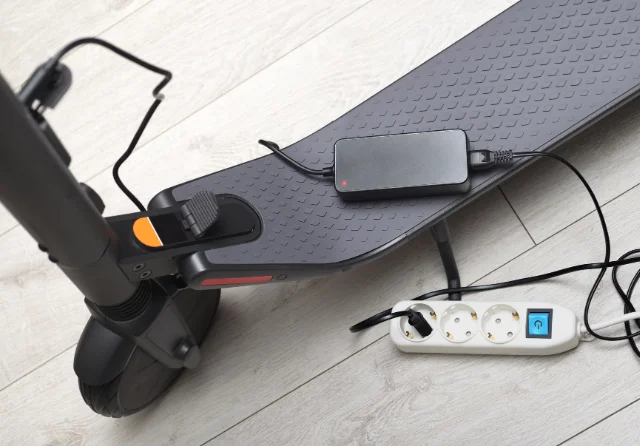
How to charge an electric scooter and how long it takes
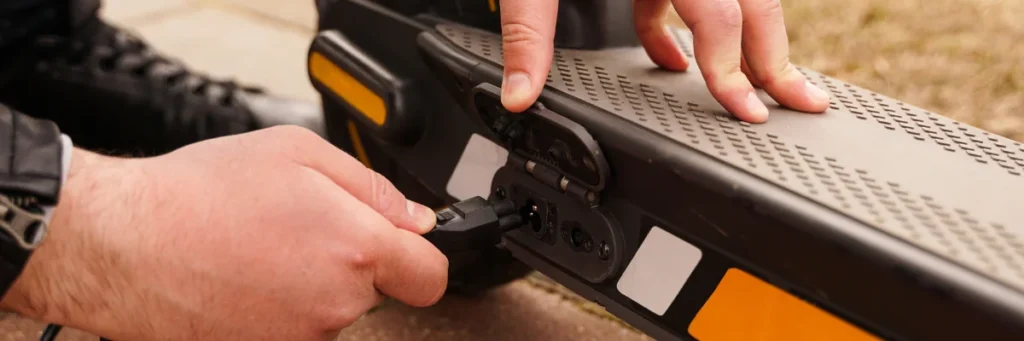
How do you charge an electric scooter? How long does it take? The time needed for a full charge depends on several factors. A basic model is not the same as a high-end one, nor is using the original charger the same as a generic one. The battery’s previous state also matters: if you plug it in at 20% charge it will take less time than if it’s fully drained.
Average charging times by model
Each brand provides indicative data for its scooters. The most popular Xiaomi models usually require 4 to 6 hours to reach 100%, while Cecotec models range between 5 and 8 hours. For premium models, such as some Segway or Dualtron, the wait can be reduced to 3–5 hours thanks to more efficient batteries and more powerful chargers. These figures serve as a guide so you can plan your charges and avoid running out of battery halfway through the day.
Factors that influence charging time
Battery capacity (measured in Wh), the power of the charger, the ambient temperature and the initial charge percentage are decisive. A large battery with a slow charger will take longer, while a smaller one with a fast charger will be ready sooner. In addition, low temperatures can extend the process, as can charging immediately after intensive use, when the battery is still hot.
Is it safe to leave it charging overnight?
In most modern scooters, the battery management system cuts the charge when it reaches 100%. Even so, leaving it connected for unnecessary hours is not recommended. If you want to charge it overnight, do so in a ventilated place, with no flammable objects nearby and always using the original charger. This way you’ll avoid overheating and potential long-term damage.
Where to charge an electric scooter?
The most common way is to plug it in at home, but there are also situations where you’ll need to do it elsewhere, either because you’re travelling or because you spend much of the day outside. These are the most common options:
- At home: domestic socket, original charger, ventilated area.
- Garages and storage rooms: ideally with your own power socket and individual meter.
- Public points: some councils and shopping centres are starting to install dedicated stations.
- Hotels: many allow charging in the room or supervised communal areas, useful if you travel with your scooter.
- Cafés or public spaces: sometimes possible with the owner’s permission, always without obstructing or disturbing.
Common mistakes that damage the battery
The battery is the heart of the scooter, and certain habits can drastically shorten its lifespan.
- Using non-original or generic chargers
They may seem like a cheap solution, but in the long run they’re costly. An unapproved charger can supply inadequate voltage, damage the internal cells and reduce range. - Leaving the battery empty for too long
If you store the scooter with the battery fully discharged for weeks or months, there’s a risk it won’t turn on again. Ideally, store it with at least 40–50% charge and check the level every few weeks. - Charging in humidity or direct sunlight
Neither the charger nor the battery is designed to work in rain or extreme heat. Always look for a dry, sheltered place to plug it in. - Disconnecting the charger improperly or forcing connections
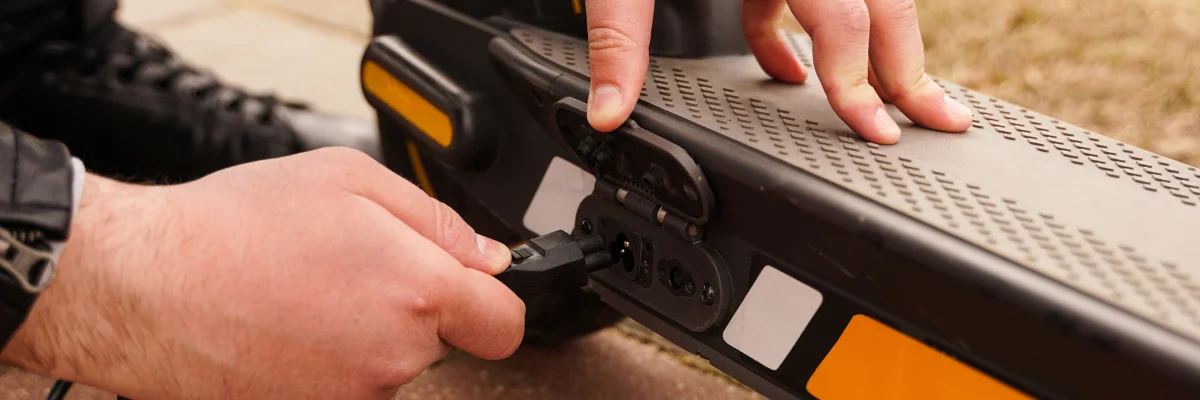
Pulling the cable or bending the connector can damage both the scooter’s port and the charger. Always disconnect from the plug gently. - Not waiting for it to cool before charging after intensive use
After a long ride or at top speed, the battery will be hot. Plugging it in immediately can cause overheating. Wait 20–30 minutes before starting the charge.
Tips to extend range on your rides
Battery life doesn’t only depend on the scooter’s capacity, but also on how you use it. With a few simple habits you can make the most of every charge and avoid running out of power mid-journey.
- Avoid sudden accelerations or constant braking: Smooth riding helps the battery last longer.
- Maintain a steady average speed: Riding at a consistent pace is more efficient than alternating between very fast and very slow stretches.
- Use ECO mode if your scooter has it: Reduces power and extends available kilometres, especially useful on longer journeys.
- Ride on flat surfaces whenever possible: Hills consume more energy. If unavoidable, tackle them at a moderate pace.
- Reduce load weight: The less weight the motor has to move, the lower the energy consumption. Check your backpack and remove unnecessary items before heading out.
What to do if the scooter doesn’t charge?
A charging failure can be due to something as simple as a faulty socket or a more serious battery issue.
- Check the socket and charger first
Try another power point and check that the charger shows no visible damage. - Check the cable connection to the scooter
Make sure it’s properly inserted and that there’s no dirt on the contacts. - Go to a service centre if the problem persists
Forcing connections or disassembling the scooter without knowledge can make the fault worse. It’s best to leave it to a professional. - And if you’re on the move? Quick solutions
If it happens while you’re out, look for a plug in a café, petrol station or any public space where they allow you to connect it for a while. Even if it doesn’t reach 100%, a partial charge will be enough to continue. Always carrying the charger in your backpack can save you from more than one problem. - How to prevent this issue in the future
Check the charger’s condition from time to time and clean the port contacts. Store the scooter with some charge and avoid leaving it unused for weeks. These simple precautions greatly reduce the chance of failure when you need it most.
Electric scooter rental in Gran Canaria: live the experience with Scooter and Bike
And if what you’re looking for is to enjoy a scooter without worrying about chargers, check-ups or maintenance, renting is the most convenient option. At Scooter and Bike Rental we offer electric scooter rental designed for getting around Gran Canaria with total ease. All our models are delivered serviced, with a full battery and the necessary safety accessories, so you only have to worry about enjoying the ride. Book your electric scooter today and discover Gran Canaria at your own pace!