Riding a scooter may seem simple: turn the key, accelerate and off you go. However, that apparent ease is what leads many beginners to make mistakes that, at best, are uncomfortable and, at worst, end in an accident. Scooters —especially 125cc ones— have their own particularities, and once you understand them you can start moving safely.
If you want some tips for a 125cc bike, in the following lines we go over the most common mistakes made by those who are new to the two-wheeled world and how to avoid them. If you’ve just got your first bike or are thinking of renting one, this overview will help you prevent scares and enjoy the ride more.
Below are the mistakes to avoid when riding a scooter:
1. Underestimating the power of a 125cc scooter
Many novice riders fall into the trap of thinking that a 125cc scooter is little more than a moped. The reality is that, in inexperienced hands, its acceleration and speed can be surprising, especially in quick starts or overtaking. It’s not about being afraid, but about being aware that you are handling a vehicle with enough power to get you into trouble if you don’t control it.
Not all scooters are “small”
Despite their manageable appearance, a 125cc can reach considerable speeds and respond strongly when accelerating. Riding one requires the same attention as any other motorbike: steady hands, sharp eyes and progressive riding. If you treat it like a toy, your margin for error decreases and the risk of an accident increases.
What can happen if you accelerate without control
A sudden twist of the throttle can destabilise you, especially when starting off or taking a corner. In these cases, loss of control is quick and difficult to correct. Always accelerate gradually and make sure both feet are firmly in place before picking up speed.
2. Braking only with the front wheel
On a motorbike, braking hard with only the front wheel is one of the fastest ways to lose control. This mistake, very common among beginners, can cause the wheel to lock and the bike to go down in a matter of seconds. The key is to distribute braking to maintain stability.
Risk of locking and falling
When all the effort falls on the front brake, the wheel loses grip and locks. At that speed, a small involuntary movement is enough for the steering to close and the fall to become inevitable.
Balanced use of front and rear brakes
The safe technique is to use both brakes at the same time, with more pressure on the front but without neglecting the rear. This distributes the braking force and keeps the bike more stable. Practising this coordination in a safe place is the best investment to avoid scares on the road.
3. Entering corners too straight or too leaned over
Corners are one of the places where most accidents occur, especially among novice riders. A common mistake is entering too straight or, conversely, leaning the bike more than necessary, losing grip.
Basic technique for safe cornering
Before entering the corner, reduce your speed and adopt a smooth line. Your gaze should always be on the exit of the corner, not on the ground or the inside of it.
How to lean your body correctly
On scooters, the body follows the bike, but without exaggerating the movement. Leaning too much can cause loss of balance, while staying too rigid makes the bike less fluid when turning. The key is naturalness: follow the turn with a slight lean of the torso and keep your arms relaxed.
4. Not anticipating traffic (and riding “like in a car”)
A motorbike is not a car, and riding as if it were is a recipe for disaster. Visibility is more limited, physical protection is less, and reaction times are shorter.
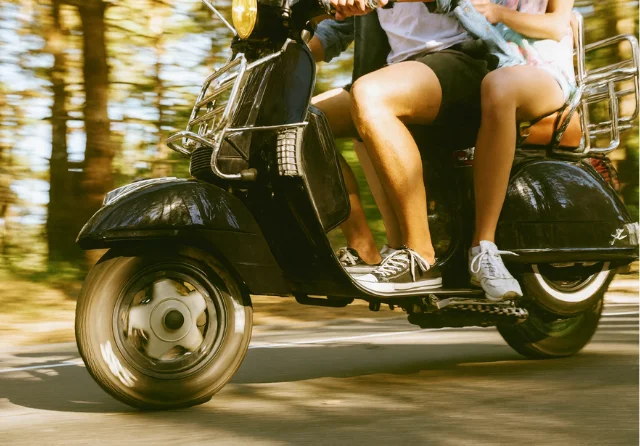
Limited visibility, little protection
On a scooter you don’t have a bodywork to protect you, so any impact can be serious. Staying visible to other vehicles is very important if you want to avoid surprises.
Safety distance and blind spots
Keep a greater safety distance than in a car and avoid entering the blind spot of other vehicles. A poorly calculated overtaking manoeuvre or an unexpected turn by another driver can leave you with no time to react.
5. Not wearing a helmet or wearing it incorrectly
The helmet is the most important safety element on a motorbike. Not wearing one or wearing it incorrectly nullifies its protective capacity.
Poorly adjusted helmet = no protection
A loose helmet can fly off in an impact. Always fasten the strap and check that it doesn’t move too much when you turn your head.
Difference between approved and non-approved helmets
Approved helmets are the only ones that guarantee they have passed resistance tests. Non-approved ones can break with a relatively small impact and put your life at risk.
6. Not checking tyre pressure
Tyre pressure directly affects stability, fuel consumption and braking ability. Ignoring it is a basic mistake.
How pressure affects handling and braking
If pressure is low, the bike feels heavier and less precise in corners. If it’s high, grip decreases and the risk of skidding increases.
Recommended inspection frequency
Check the pressure at least once a month or before a long trip. Always do it with cold tyres to obtain an accurate reading.
7. Riding with fear or overconfidence
Attitude at the handlebars matters as much as technique. Riding with fear blocks you; riding with overconfidence exposes you to unnecessary risks.
Tension harms stability
A tense rider reacts worse and tires arms faster. Keeping a relaxed posture helps movements remain fluid.
Arrogance generates avoidable mistakes
Believing that “you’ve already mastered it” after a few rides is a direct path to an accident. Always respect the rules and road conditions.
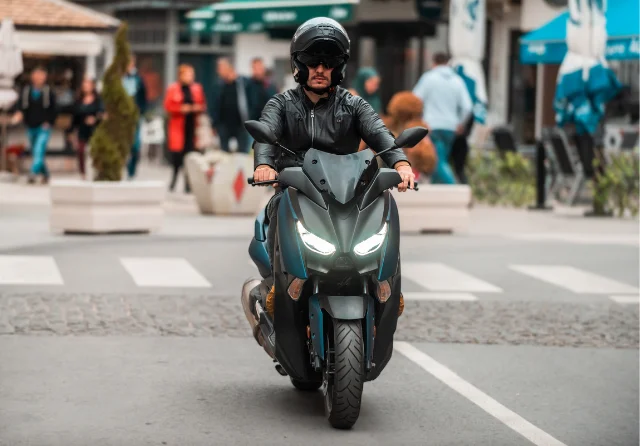
8. Carrying passengers without experience
Riding with a passenger changes the bike’s behaviour: weight increases, braking is modified and stability is affected.
It changes the bike’s stability
The centre of gravity shifts and the scooter may respond differently when turning or braking.
What a passenger should know before getting on
They must keep their feet on the footrests, not move abruptly, and follow the bike’s lean in corners. An insecure or distracted passenger is a risk.
9. Not signalling or checking when changing lanes
Changing lanes without warning is dangerous for any vehicle, but on a motorbike the consequences can be much more serious.
Dangerous manoeuvre in the city
In urban environments, a sudden lane change can surprise cars and pedestrians and cause an accident.
“Look + mirror + signal” technique
Before moving, look towards the lane you want to enter, check the mirror and signal with the indicator. Then, make the change.
10. Not using the right equipment
A helmet is essential, but it is not the only protective element that counts.
Gloves, jacket, closed footwear
These three basics protect against falls and weather. Protected hands, a jacket with armour and sturdy shoes are essential to enjoy the ride and protect yourself.
How to protect yourself with the basics, even in summer
There are ventilated and lightweight garments that offer safety without making the heat unbearable. Being comfortable does not mean being unprotected.
Avoiding these 10 mistakes is not a matter of luck, but of habits and awareness. A scooter can be a great choice for moving quickly and freely, but it requires respect and attention. Riding properly not only extends your scooter’s life: it also extends yours.
At Scooter and Bike Rental, we offer scooter rental in Gran Canaria with fully serviced vehicles ready to ride. All our scooters are prepared so you can get around the island comfortably and safely. Book your scooter today and discover Gran Canaria at your own pace.