

Yes, women’s road bikes have differences compared to many men's models because anatomy and posture on the bike are not the same. In general, the proportions between the torso, legs, shoulders and pelvis influence the frame size, reach to the handlebars, the saddle and overall comfort during a ride.
For this reason, when choosing a women’s road bike, you need to consider frame geometry, your position on the bike, the type of saddle, handlebar width and how you intend to use it. A well-chosen bike should allow you to pedal comfortably, maintain control and avoid strain from your very first ride.
How a women’s bike differs from a men’s bike
Although every brand develops its own designs, women’s road bikes usually incorporate adjustments intended to improve posture, control and comfort on the bike.
These are the most common differences compared to a men’s road bike:
- Frame geometry: A shorter reach reduces the distance to the handlebars and prevents a posture that is too stretched out.
- Available sizes: Women’s ranges usually include smaller sizes, such as XS or S, for shorter cyclists or those who prefer a more compact position.
- Handlebars: Narrower handlebars adapt better to narrower shoulders.
- Saddle: A specific saddle improves pelvic support and reduces discomfort on long rides.
- Stem: A shorter stem brings the handlebars closer, facilitating a more comfortable posture.
- Cranks: Shorter cranks encourage a more natural pedal stroke for those with shorter legs.
The goal is for the bike to better fit the cyclist's actual posture, without forcing them to compensate by overstretching their arms, back or shoulders.
How to choose the size of a women’s road bike
Size determines posture, weight distribution and the sense of control on the bike. On the road, the wrong size will cause you to feel too much pressure on your hands, tension in your back, knee pain or a lack of control on corners and descents.
Body height serves as a first reference, but it shouldn't be the only factor you look at. You must also consider leg length, torso proportions, the distance to the handlebars and your posture on the bike. Two women with the same height may need different adjustments if one has longer legs and a shorter torso, or vice-versa.
When choosing a women’s bike size, the position should allow you to pedal fluidly, without being too cramped or overly stretched. The cyclist should be able to reach the brake levers easily, rest their hands without tension and maintain a stable position on the saddle.
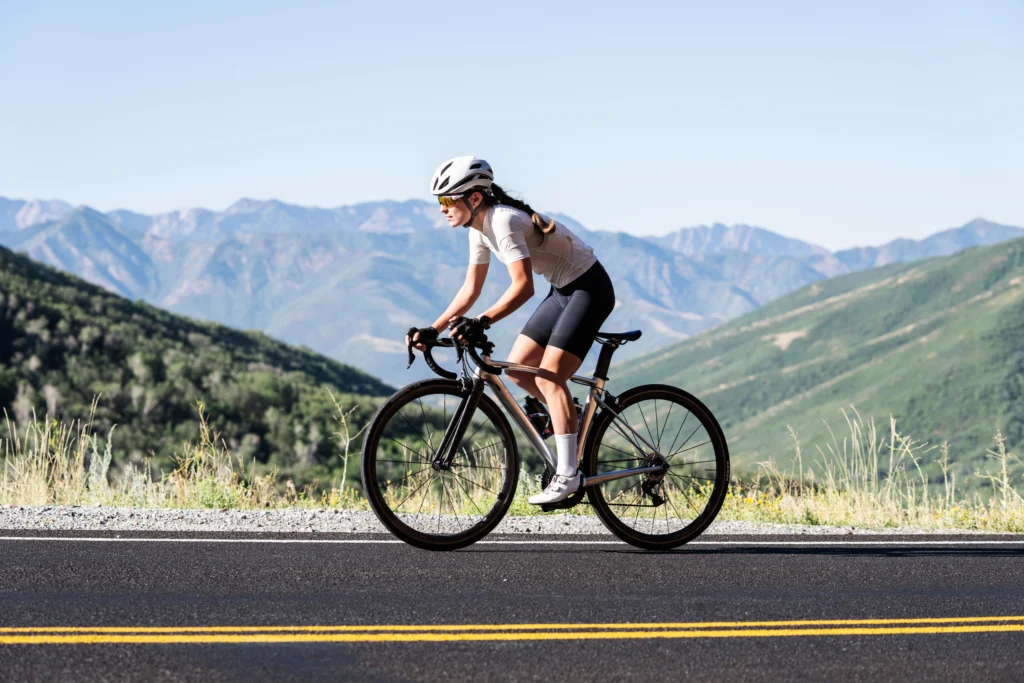
Sizes XS and S in a women’s road bike
Sizes XS and S are common in many women’s ranges, especially when the cyclist is shorter or needs a more compact position on the bike. These sizes help reduce the distance to the handlebars and facilitate greater control on the road, where the position is maintained for many kilometres.
The reach determines how much you have to stretch to reach the handlebars. If it is too long, you will put more weight on your hands and shoulders. The stack influences the height of the handlebars in relation to the frame: a slightly higher stack allows for a less aggressive position, which is useful if you are starting out or want to do long rides without straining your back.
You also need to look at the top tube and the stem. An XS size with a long geometry can be more uncomfortable than an S size with a more balanced geometry. Therefore, when comparing models, the size label is only a starting point: what matters is checking the distance to the handlebars, the saddle height and the position of the shifters.
The correct size should allow you to rest your hands with control, brake without overextending your fingers, keep your shoulders relaxed and pedal without your knee being overly flexed or extended. This is how you can tell if the bike really fits.
Why size doesn’t just depend on height
Height helps narrow down the size, but it doesn’t fully explain how the cyclist will fit on the bike. On the road, posture also depends on the proportions between your legs, torso and arms, and that proportion varies greatly from person to person.
Two women with the same height may need different sensations on the frame. A cyclist with longer legs may be able to adjust the saddle height well, but feel too stretched if the top tube or reach are long. Another with a longer torso and shorter legs might need a different position to reach the handlebars comfortably without closing the pedalling angle too much.
The stack is also important because it determines the height of the handlebars relative to the frame. A lower stack puts the cyclist in a more sporty, aggressive position; a higher stack facilitates a more upright position, which is useful for beginners, long rides or avoiding excessive load on the back and shoulders.
For this reason, the size chart should be taken as an initial guide. Afterwards, you must check the fit on the bike. The stem, saddle or position of the controls can correct minor misalignments, but they cannot compensate for a clearly incorrect size.

What type of women’s road bike to choose
Once you have determined the size, the next step is to think about the type of use it will get. Your level of experience, the terrain, the frequency of your rides and your budget influence your choice of bike.
To start, a beginner’s road bike for women should be stable, comfortable and easy to handle. It is important to choose smoother gear ratios, a less aggressive geometry and easy-to-use components. This type of bike allows you to gain confidence without requiring an overly sporty posture from day one.
If you are looking for more lightness and responsiveness, you can consider a carbon-frame road bike. This material reduces weight, better absorbs certain vibrations and offers a more reactive ride. It is a good choice for frequent rides, training or hilly routes, although it requires a larger investment and a more precise size selection.
You can also consider an electric road bike if you want to tackle routes with more elevation, cover more distance or arrive less fatigued at the end of the ride. Pedal assistance helps on climbs and allows you to maintain a more constant pace, although it adds weight and requires you to check the battery range well before heading out.
Buying, testing or renting a road bike
Testing different frame types before buying a bike can help you determine which position you find most comfortable. Small changes in geometry, the saddle, the stem or the handlebars are much more noticeable on a road bike, especially when the ride gets longer.
You can buy if you know you are going to ride frequently and you know your size, frame material and the geometry you need. Renting can be a good option if you are just starting out, if you are only going to do occasional rides or if you want to test a road bike before investing in one of your own. It is also practical during a trip, because it allows you to pedal without transporting your own bike and adapt your choice to the route you want to do.
If you are in Gran Canaria, road bike rental in Maspalomas allows you to organise a road ride without travelling with your own bike. Before starting your route, check the size, saddle height and shifter position to ensure you can pedal properly and maintain good control from the start.