

Getting around a city by bike may seem straightforward until you encounter junctions, traffic lights, pavements, cycle lanes and pedestrians. That is when questions arise: where should you ride, when do you have priority, do you need to wear a helmet, and are headphones allowed while cycling?
This article covers the main rules for cycling in urban areas, with practical advice that is easy to follow. We look at the regulations governing bicycles in cities, the safety equipment you need and the habits that can help you avoid accidents or fines on everyday journeys.
We also explain how to cycle more safely in urban areas such as Maspalomas, particularly if you plan to use a bike during your holiday or are considering hiring one to get around Gran Canaria.
What you need to know before cycling in the city
Before setting off by bike in an urban area, there are three key points to remember:
A bicycle is a vehicle.
Cyclists must obey traffic signs and signals.
Bicycles cannot be ridden everywhere.
These principles may seem obvious, but pavements, cycle lanes, pedestrian crossings, traffic lights and shared spaces often cause confusion.
Spain’s Directorate-General for Traffic, the DGT, sets out general rules for cyclists, although each local authority may introduce additional requirements through its own regulations. Cycling in Maspalomas may therefore differ slightly from cycling in Madrid, Barcelona or another city. The basic principles, however, remain the same: follow the signs, use the correct part of the road and ride predictably.
The type of journey also matters. A short ride through a quiet area is less demanding than a route involving junctions, heavy traffic or sections without cycle lanes. In urban areas, safety depends largely on anticipating other road users, looking carefully before changing position and avoiding sudden movements.
Where should cyclists ride?
One of the most common questions when cycling in a city is which part of the road to use. The general rule is simple: bicycles should use designated cycling infrastructure where provided or ride on the carriageway, always following signs and traffic regulations.
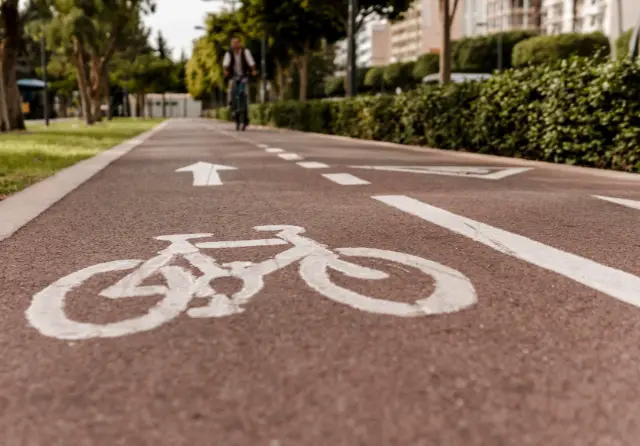
Cycle lanes, carriageways and pavements
Rules governing cycle lanes may vary between local authorities, but where one is available, it is usually the safest option, particularly in areas with heavy traffic. Even so, using a cycle lane is not always compulsory. This depends on the road signs and the local regulations in force.
Where there is no cycle lane, bicycles must use the carriageway. In towns and cities, cyclists will generally ride towards the right-hand side of the lane, while leaving enough space between themselves, the kerb and parked cars. Riding too close to the pavement can be dangerous, especially where there are drains, grilles, opening car doors or pedestrians stepping into the road unexpectedly.
Pavements are for pedestrians. As a general rule, cycling on them is not permitted unless there is a clearly marked shared-use pavement or a section specifically designated for bicycles. If you need to pass through a pedestrian area where cycling is prohibited, you should dismount and walk with your bike.
Right of way and sharing space with pedestrians
Right of way depends on the type of road and the signs in place. Cyclists have priority over motor vehicles when riding on a cycle lane, crossing at a designated cycle crossing or using an area clearly marked for bicycles. Even then, it is important to slow down at junctions and make sure other road users have seen you.
Extra care is needed around pedestrians. At pedestrian crossings, on pavements, in shared spaces and in busy areas, cyclists must not encroach on pedestrian space or force people to move aside. If you need to use a pedestrian crossing that does not include a cycle crossing, you should dismount and walk across.
In urban areas, cyclists should make themselves visible and ride predictably. Signalling turns in good time, avoiding sudden lane changes and slowing down near pedestrians all help to make journeys safer for everyone.
Basic rules for cyclists
When cycling in the city, you must obey road signs, traffic lights, right-of-way rules and the direction of travel on each road. A bicycle is a vehicle, but cyclists have far less physical protection than drivers or motorcyclists, so anticipating every manoeuvre is especially important.
Traffic lights, road signs and direction of travel
Cyclists must obey traffic lights just like every other road user. Riding through a red light, cycling across a pedestrian crossing without dismounting or ignoring a stop sign can create dangerous situations and may also result in a fine.
You must also follow the permitted direction of travel. Even if a street appears quiet, riding the wrong way can take drivers, motorcyclists, pedestrians and other cyclists by surprise. Cycling against the flow of traffic is only allowed where specific signs permit it, as may be the case on certain cycle streets or in low-traffic zones.
Cyclists should also pay attention to signs specifically intended for bicycles. These may indicate dedicated lanes, cycle crossings, shared spaces or sections where particular cycling rules apply. In these situations, the signs on the road take precedence over local habits or what may be allowed elsewhere.
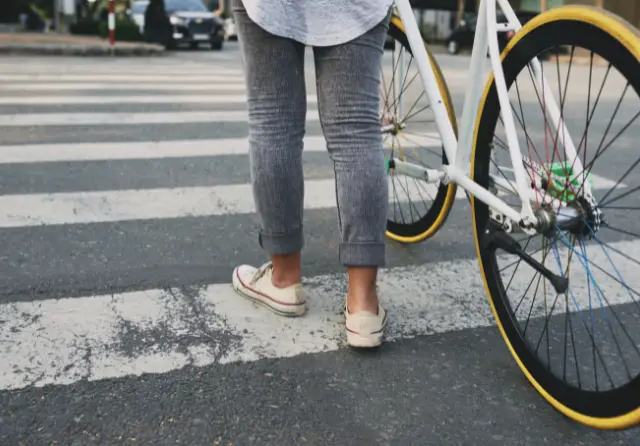
Turning, junctions and roundabouts
Turns should be signalled in good time and carried out smoothly. Before changing direction, look around, make sure the manoeuvre is safe and clearly indicate your intentions to other road users. A clear arm signal helps drivers, motorcyclists and pedestrians understand where you are going.
Take particular care at junctions. Even when you have priority, slow down and make sure other vehicles have seen you. This is especially important near garage entrances, at junctions with limited visibility and where a cycle lane crosses a road.
At roundabouts, the safest approach is to maintain a predictable line and avoid last-minute lane changes. When preparing to take an exit, signal clearly and check that no vehicle is moving into your space. Many incidents in cities occur because turns have not been signalled properly or because drivers misjudge the speed of a bicycle.
Helmets, lights and compulsory safety equipment
Helmets, lights, bells and reflectors are all part of the essential equipment for urban cycling. The rules governing their use vary according to age, time of day and visibility, although each of these items helps make cycling safer.
Spanish cycling helmet regulations require anyone under the age of 16 to wear one on urban roads. For adults cycling in towns and cities, helmet use depends on the applicable regulations. Even where it is not compulsory, a helmet provides valuable protection in the event of a fall and is strongly recommended on roads with traffic, frequent junctions or sections shared with cars and motorcycles.
Bicycle lighting regulations mainly apply when cycling at night, at dawn, at dusk or in poor visibility. Bicycles must have a white front light, a red rear light and a red non-triangular rear reflector. Additional reflective elements also help other road users spot you sooner, particularly on poorly lit streets.
A bell allows you to give advance warning on cycle lanes, in shared areas or near junctions with limited visibility. It should not be used to force pedestrians out of the way, but to alert others to your presence where paths may cross or someone may not have noticed you.
Visible clothing, gloves and cycling glasses are also useful for urban rides. They are not usually compulsory, but they improve comfort and can reduce risks on longer journeys.
Our guide to protective equipment for cycling provides further information on accessories that can help you ride more safely.
Mobile phones and headphones
Using a mobile phone or headphones is one of the most common mistakes made by urban cyclists. They reduce concentration, slow your reaction to vehicles, pedestrians and traffic lights, and may result in a fine.
You must not cycle while wearing connected headphones or handle a mobile phone while riding. To check a route, reply to a message or make a call, stop somewhere safe before continuing your journey.
You should also avoid looking at your GPS constantly. If you need navigation, secure your phone in a suitable mount and use visual directions or voice guidance without headphones, while keeping your attention on the road at all times.
Bicycles and e-bikes for getting around Maspalomas
Are you on holiday in Maspalomas and planning how to travel around the island? Our guide to getting around Gran Canaria without a car explains the different options available.
A conventional bicycle is ideal for flat routes, leisurely rides and journeys that do not require too much physical effort. For this type of trip, bike hire in Maspalomas gives you the freedom to choose a comfortable bicycle and explore the area at your own pace.
For longer distances, hot days or routes with more demanding sections, an e-bike can make the journey more comfortable and help you maintain a steady pace. In that case, e-bike hire in Maspalomas may be the better option if you want to reduce the effort without giving up the experience of cycling.
At Scooter and Bike Rental, every bicycle is checked and adjusted before collection and comes with essential accessories to help you cycle more safely in urban areas and plan your route more effectively.