

Getting around by bike in the city seems simple until you reach junctions, traffic lights, pavements, cycle lanes and pedestrians. That’s when questions arise: where should you ride, when do you have right of way, what about a helmet, or can you wear headphones while pedalling?
In this article, we review the main rules for cycling in the city, with a practical, easy-to-apply approach. We’ll look at what traffic regulations say about cycling in the city, what safety equipment you must carry, and what habits can help you avoid scares or fines during your daily commutes.
We’ll also discuss how to cycle more safely in urban areas like Maspalomas, especially if you plan to use a bike during your holiday or are thinking about renting a bike to get around Gran Canaria.
What you need to know before cycling in the city
Before heading out on a bike in the city, you should be clear on three ideas:
- The bicycle is a vehicle.
- You must obey traffic signals.
- You cannot ride in just any space.
It sounds basic, but doubts often arise regarding pavements, cycle lanes, pedestrian crossings, traffic lights or shared zones.
Traffic regulations set out general rules, although each municipality can add its own specific details through local ordinances. Therefore, cycling through Maspalomas may not be exactly the same as in Madrid, Barcelona or any other city. The common point of reference is simple: respect the signage, use the correct lane and maintain predictable riding.
You also need to take into account the type of journey. A short trip through a quiet area poses fewer difficulties than a route with junctions, heavy traffic or sections without cycle lanes. In the city, safety depends heavily on anticipating manoeuvres, looking before changing position and avoiding sudden movements
Where should cyclists ride?
One of the most common questions when getting around by bike in the city is how to choose the right space for riding. The general rule is simple: the bicycle must go in the space enabled for it or on the road, always respecting the signage and traffic rules.
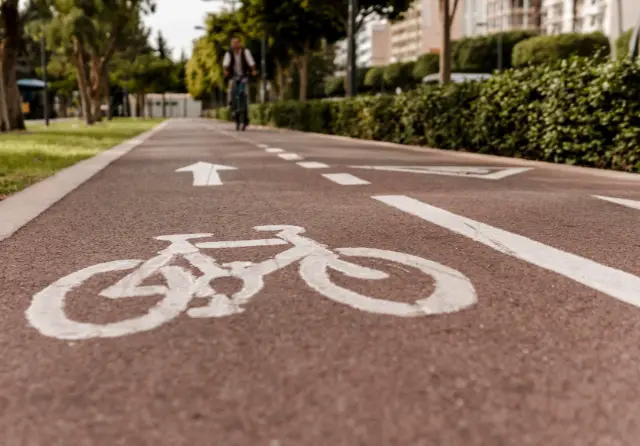
Cycle lanes, roads and pavements
The regulations on cycle lanes can change depending on the municipality, but the cycle lane is usually the safest option when it exists, especially in areas with traffic. Even so, their use is not always mandatory: it depends on the road signage and what the municipal ordinance establishes.
If there is no cycle lane, bicycles must ride on the road. In the city, the most common practice is to ride on the right side of the lane, with enough separation from the kerb and parked cars. Riding too close to the pavement can be dangerous, especially if there are grates, drains, car doors opening or pedestrians stepping out suddenly.
The pavement (sidewalk) is reserved for pedestrians. As a general rule, you should not cycle on it unless there is a marked cycle path or a zone specifically enabled for bicycles. If you need to pass through a pedestrian zone where cycling is not allowed, the correct thing to do is get off the bike and walk with it.
Right of way and coexisting with pedestrians
Right of way depends on the type of road and the signage. Cyclists have priority over motor vehicles when riding in a cycle lane, a pedestrian crossing for cyclists, or a zone enabled and marked for bicycles. At junctions, however, it is important to slow down and check that other vehicles have seen your manoeuvre.
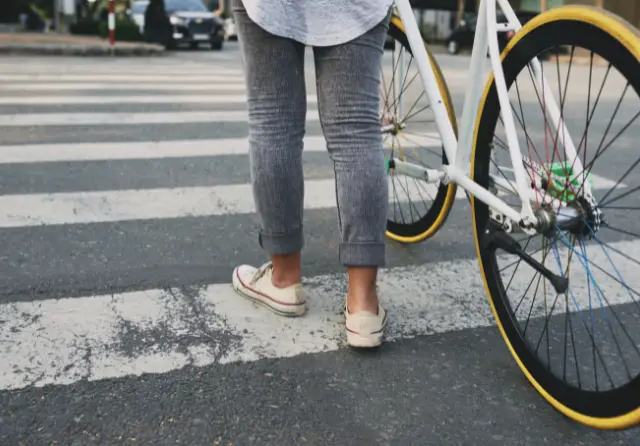
With pedestrians, the rule should be more cautious. On pedestrian crossings, pavements, shared zones and high-traffic areas, the bicycle should not invade the pedestrian space or force anyone to move out of the way. If you are going to cross a pedestrian crossing without a cycle path, you must get off and cross on foot.
In the city, it is important to make yourself visible and ride predictably. Signalling turns in advance, avoiding sudden lane changes and reducing speed near pedestrians helps make the journey safer for everyone.
Basic rules for cyclists
To cycle in the city, you must respect signs, traffic lights, right of way and the direction of traffic on each road. The bicycle is a vehicle, although the cyclist has less protection than the driver of a car or motorbike, so anticipating every movement is especially important.
Traffic lights, signs and direction of travel
Bicycles must obey traffic lights just like any other vehicle. Running a red light, riding across a pedestrian crossing without getting off the bike, or ignoring a stop sign can cause risky situations and also lead to a fine.
The direction of traffic must also be respected. Even if a street seems quiet, riding in the opposite direction can surprise cars, motorbikes, pedestrians and other cyclists. You can only do so if there is specific signage allowing it, as happens in some residential streets or low-traffic zones.
You must also pay attention to signs for bicycles. Some indicate reserved lanes, cycle crossings, shared zones or sections where the bike has specific regulations. In these cases, the road signage takes precedence over custom or what is done on other streets.
Turns, junctions and roundabouts
Turns must be signalled in advance and without sudden movements. Before changing direction, you must look, verify that the manoeuvre is safe, and alert other road users. On a bicycle, a clear hand gesture helps cars, motorbikes and pedestrians understand where you are going.
At junctions, it is important to be cautious. Even if you have priority, slow down and make sure other vehicles have seen you. This idea is especially important when exiting garages, at intersections with poor visibility, and on streets where the cycle lane crosses the road.
At roundabouts, the safest approach is to maintain a predictable trajectory and avoid last-minute lane changes. If you are going to exit via a specific road, signal the manoeuvre and check that no vehicle is invading your space. In the city, many scares occur precisely because of poorly signalled turns or drivers who do not judge a bicycle’s speed correctly.
Helmet, lights and mandatory safety equipment
The helmet, lights, bell and reflectors are part of the basic equipment of an urban bike. The rules on their use change depending on age, time of day and visibility, although all these elements help you ride more safely.
- Regulations regarding the use of a helmet on a bicycle make it mandatory for those under 16 years of age on urban roads. For adults in the city, its use depends on the applicable regulations. Even so, it provides great protection in the event of a fall and is highly recommended on streets with traffic, frequent junctions or sections shared with cars and motorbikes.
- Regulations regarding bicycle lights mainly affect riding at night, at dawn, at dusk or in poor visibility. The bike must have a white light at the front, a red light at the back and a non-triangular red rear reflector. Reflectors also help other users see you sooner, especially on poorly lit streets.
- The bell is used to warn in time in cycle lanes, shared zones or junctions with poor visibility. Its function is not to move pedestrians aside, but to warn of your presence in points where there may be a crossing or distraction.
- Visible clothing, gloves or glasses are also recommended for urban routes. They are not usually part of basic obligations, but they provide comfort and reduce risks when the journey is longer.
Our guide on bike protection equipment expands on this section with information on accessories for cycling more safely.
Mobile phones and headphones
Using a mobile phone and headphones is one of the most common mistakes when cycling in the city. Using them while riding reduces attention, delays reaction times to a car, pedestrian or traffic light, and can result in a fine.
You should not ride with headphones on or manipulate your mobile phone while pedalling. To check a route, reply to a message or make a call, the right thing to do is stop in a safe place and resume the journey afterwards.
You should also avoid looking at the GPS constantly. If you need to follow a route, it is better to carry your mobile phone securely in a mount and use visual or voice prompts without headphones, always without taking your eyes off the road.
Bicycles and eBikes for getting around Maspalomas
Are you on holiday in Maspalomas and organising your trips around the island? Our guide on how to get around Gran Canaria without a car can help you find out what options you have.
The conventional bike works very well for flat routes, gentle rides and trips without too much physical exertion. For this type of plan, bike hire in Maspalomas allows you to choose a comfortable bike to get around the area at your own pace.
For longer distances, hot days or routes with some tougher sections, an eBike can make the ride more comfortable and help you maintain a steady pace. In that case, eBike hire in Maspalomas will suit you better if you want to reduce effort without giving up on a bike ride.
At Scooter and Bike Rental, the bikes are delivered serviced and adjusted, with basic accessories for riding more safely around town and better preparing your route.