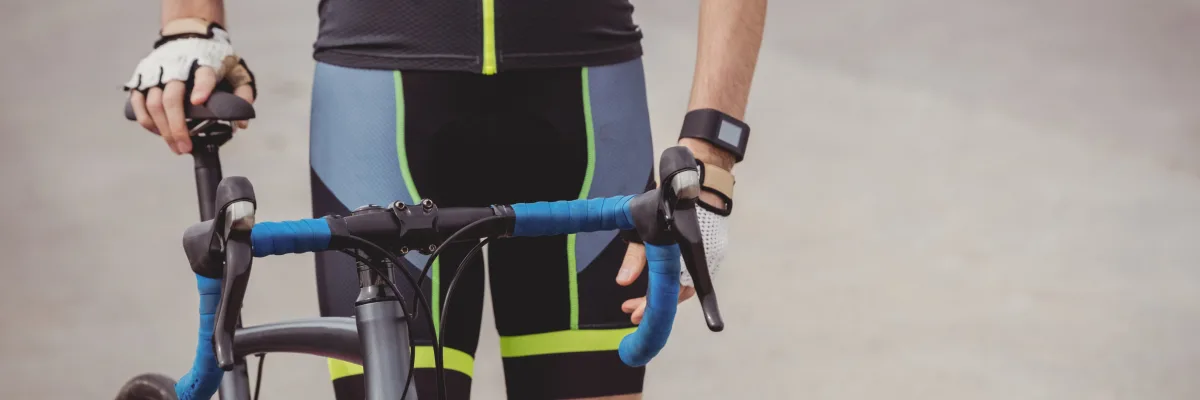
If you are preparing for your holiday in Gran Canaria and want to go for a bike ride, it is important to think about the cycling kit or clothing you should pack in your suitcase. But the type of bike you use also matters. If you aren’t travelling with your own, bike hire in Gran Canaria is a perfect solution that will allow you to choose a suitable option for getting around the island and organising each outing better.
Good cycling gear helps you pedal in greater comfort and avoid common issues like chafing, cold hands or a lack of protection in the event of a fall. There are also bike accessories that are very practical when a ride goes on longer than expected or when you are riding through an area you aren’t familiar with.
In this guide, we review which cycling kit makes the most sense depending on the intended use: technical clothing, gloves, basic accessories and the differences between road cycling, MTB and routes in Gran Canaria.
What cycling equipment do you need?
Your basic kit must cover three needs: pedalling comfortably, including protective elements and resolving minor unforeseen issues during the ride. From there, the type of bike and the route will dictate the rest.
Your clothing should allow you to move well on the bike and avoid chafing. On long rides, a suitable pair of bib shorts makes much more of a difference than a generic technical t-shirt. It is also important to choose a top that breathes well and doesn’t accumulate excess sweat.
A helmet should never be left out of any ride. Along with it, gloves help improve your grip and reduce pressure on your hands. If you are going to ride in low light, lights and reflective elements become part of your basic kit, not an optional extra.
Among the accessories for cyclists, there are some that make sense even on simple routes: a spare tube if you use clincher tyres, a compact pump and a small multi-tool. They don't take up much space and can solve a basic breakdown without needing to depend on anyone else.
Cycling clothing for different types of rides
Clothing should be chosen according to the time spent on the bike and the type of route. On a short ride, you can wear simple sportswear, but on longer routes, your cycling kit greatly influences your comfort.
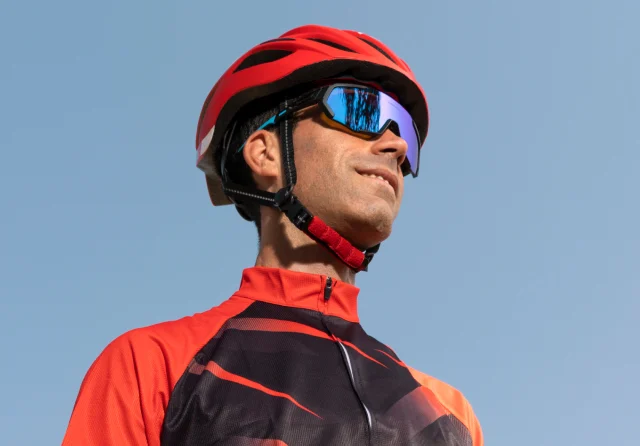
Men’s and women’s cycling kit
Cycling kit for men and cycling kit for women have the same function: to fit the body well, reduce chafing and improve breathability during the ride. What usually changes is the pattern, the chamois pad and the fit of the garments.
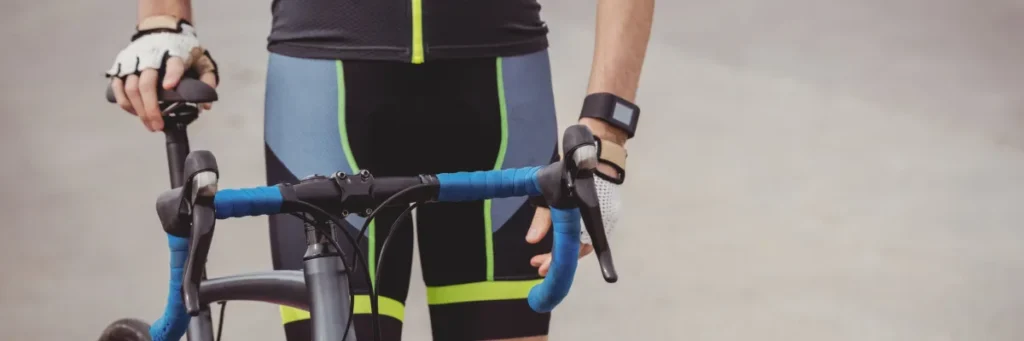
The bib shorts are the piece of kit that most determines comfort on long rides. The chamois pad must adapt well to the contact area and stay in position on the saddle. If it moves, bunches up or compresses too much, discomfort will appear quickly. In road cycling, tighter bib shorts are usually worn because the posture is more stable and pedalling maintains a more continuous rhythm.
The jersey also changes depending on the type of ride. For road cycling, it’s best if it’s snug without pulling on your shoulders or back when you are hunched over the handlebars. On milder routes, you can wear slightly less fitted garments, provided they breathe well and don’t trap moisture. In winter, cycling kit must add thermal protection without limiting movement, especially on descents or long rides with changing temperatures.
In the case of cycling kit for women, the chamois pad and the cut of the bib shorts are usually adapted to a different anatomy. The fit of the jersey around the chest, waist and hips also changes. Rather than choosing based on aesthetics, you should pay attention to how the garment fits in an actual pedalling position.
MTB enduro clothing
Clothing for MTB enduro is designed for more physical use on the bike. In mountain biking, you change your posture more frequently, lift your body off the saddle and need to move freely on the bike. For this reason, this type of clothing is usually less snug than road cycling kit and uses fabrics that are more resistant to abrasion.
Your trousers or shorts should allow you to pedal without catching on the saddle or limiting your leg movement. On enduro routes, they must also be compatible with protection such as knee pads. If the garment is too stiff, it’s annoying when climbing. If it is too loose, it can get in the way on technical descents.
The top must breathe well, but also withstand more wear and tear than a thin road cycling jersey. In MTB, contact with branches, backpacks, protective gear or mud is more common, so a technical t-shirt that is too light can deteriorate quickly. For long routes, it is also useful for it to have a cut that doesn’t ride up when moving on the bike.
MTB enduro clothing should be chosen according to the intensity of the route. For a quiet ride on trails, a light MTB kit may be sufficient. For technical descents or routes with rougher terrain, you should prioritise resistance, freedom of movement and compatibility with protective gear.
Summer and winter cycling gloves
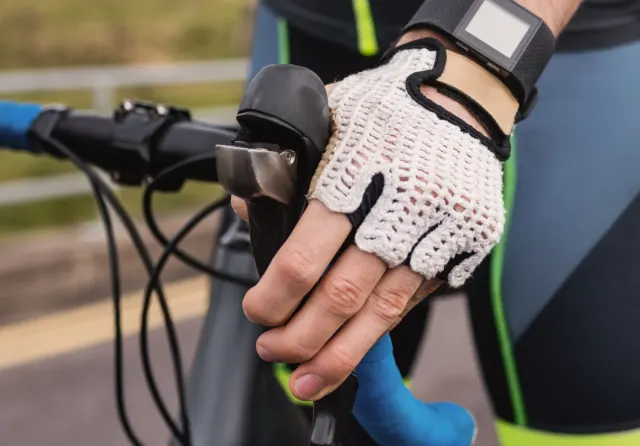
The choice of gloves depends on the temperature, the type of route and the control you need over the handlebars. A good glove improves your grip, reduces pressure on the palm and protects your skin in the event of a fall.
Summer cycling gloves are usually short-fingered, lightweight and breathable. The important thing is that they don’t accumulate sweat on the palm and that they maintain good feel on the grips or handlebar tape. In MTB, many cyclists prefer long-fingered gloves even in hot weather, because they better protect their fingers from branches, scratches or small impacts. This is why summer MTB gloves usually seek a balance between ventilation and protection.
Cycling accessories for every type of ride
Accessories for cyclists change according to the duration of the ride and the type of route. On a short outing, you don’t need to carry too much, but on longer routes, it is important to carry what you need to drink, fix a puncture or adjust a simple part if a problem arises.
- Among bike accessories in general, a bottle cage, lights and a small saddlebag are usually the most practical for regular use. The bag allows you to carry a tube, tyre levers or a multi-tool without taking up space in your jersey pockets.
- Accessories for road bikes usually prioritise lightness and reduced size. A compact pump, a rear light and a puncture repair kit fit well on long rides without adding too much volume. For a more sporty ride in the south of the island, you can also consider road bike hire in Maspalomas and adapt your kit to a more demanding tarmac route.
- Accessories for mountain bikes have to withstand dust, impacts and changes in terrain better. On MTB routes, a somewhat more comprehensive multi-tool and a securely fastened bag are more useful than accessories designed only for city use.
If you are organising a longer ride, this guide on cycle touring and gear will help you better prepare your kit and the route.
Bike hire in Maspalomas with Scooter and Bike
After preparing your kit, the next step is choosing a suitable bike to get around the island. At Scooter and Bike, you can hire bikes in Maspalomas with models designed for different types of ride, whether you are looking for a leisurely ride or want to organise a longer route around Gran Canaria. Check out the best cycling routes in Gran Canaria to better plan your outings on the island.
The bikes are delivered serviced and adjusted for use, with basic accessories for riding more safely. The hire includes an approved helmet, padlock, lights and city map, in addition to the option of adding a basket, subject to availability.
Booking can be done online in a few steps and you only need to present your valid ID or passport when picking up the bike. Once there, the team will help you complete the hire and pick up the bike so you can start your ride without wasting time.