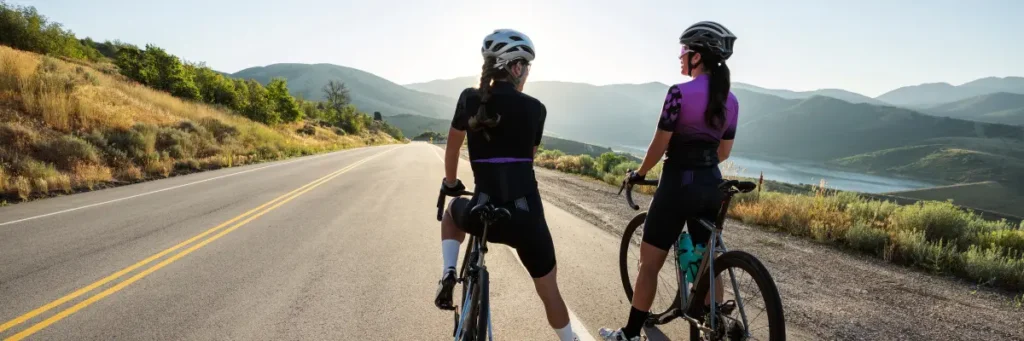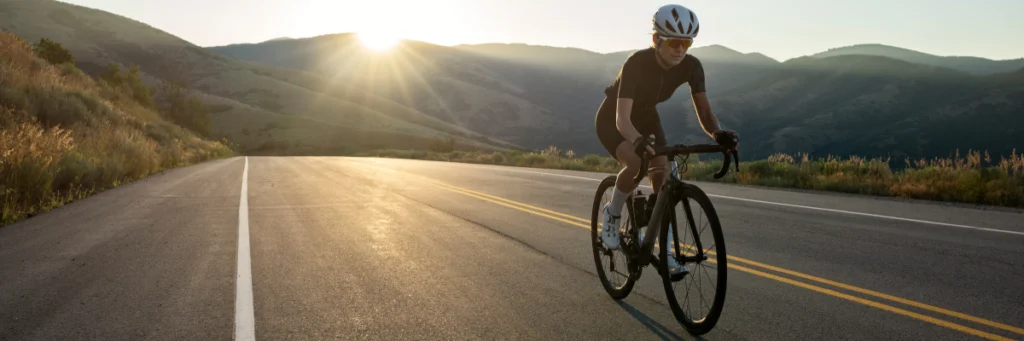
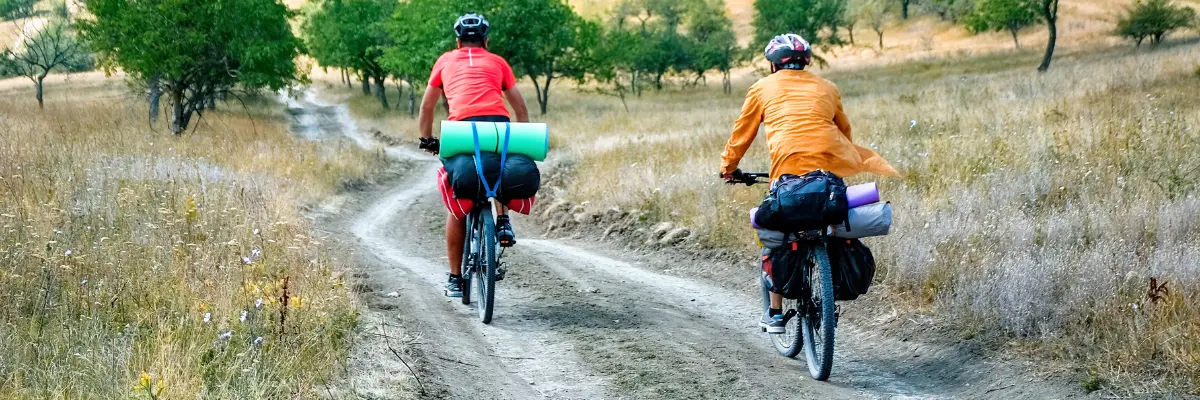
Cycle touring: what is it? Cycle touring involves travelling through a region by bicycle for tourism and recreational purposes. The aim is to discover landscapes, villages, and other locations during the journey, without focusing the trip on sporting performance. It can be a day excursion or a multi-stage trip, with pre-booked accommodation or by carrying everything you need on the bike.
You can use almost any bike to get started, although the terrain, the distance, and the amount of luggage will determine which is most suitable. In this article, we explain what types exist, how to choose a bike for cycle touring, and what equipment you need to prepare for your first routes.
Types of cycle touring
Cycle touring allows for very different journeys. Some people start with day trips along greenways, secondary roads, or local paths. Others link several stages and carry their clothing, tools, and the rest of their luggage on the bike. In both cases, the journey is enjoyed as part of the trip, and stops are made to explore the places found along the way.
Pannier touring uses a rack to carry larger capacity bags and is usually associated with long trips. In bikepacking, the luggage is distributed in bags attached to the frame, handlebars, and saddle; a common configuration for routes with less load and sections on tracks or trails.
It can also be practised self-sufficiently. In this case, the cyclist carries gear to sleep, cook, and fix common repairs. Those who stay in hotels, hostels, or rural guesthouses can significantly reduce their luggage.
All these styles share the benefits of cycling, although the duration, terrain, and load influence the choice of bike.
Which bike to choose according to the type of route
The cycle touring bike must adapt to the terrain you will be cycling on, the duration of the trip, and the weight you will be carrying. Beyond that, the options are extensive. You can travel with a touring bike set up for panniers, a gravel bike to combine tarmac and trails, or a mountain bike if the route includes more challenging paths. Road bikes and e-bikes are also suitable, although each has its own particularities.
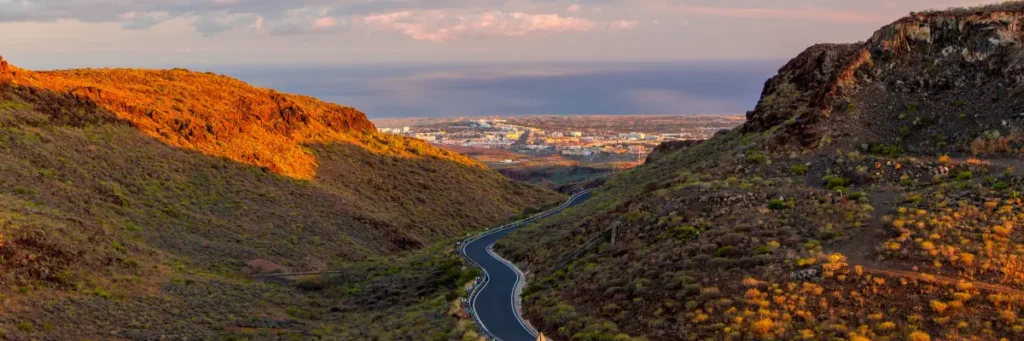
If you are going to cycle through Gran Canaria, this selection of the best cycling routes in Gran Canaria will help you check the terrain, distance, and elevation gain before choosing your bike.
Touring, trekking, and hybrid bikes
Touring bikes are designed to cover long distances with luggage. They usually feature a stable geometry, gear ratios suitable for climbing slopes with a load, and several mounting points for racks, mudguards, and bottle cages. The wheelbase is typically long to improve stability and prevent your heels from hitting the rear panniers while pedalling.
Trekking and hybrid bikes share some of these characteristics, although they are designed for more versatile use. They perform well on tarmac, greenways, and well-maintained paths, making them a practical choice for day trips or moderately difficult journeys.
Gravel and mountain bikes
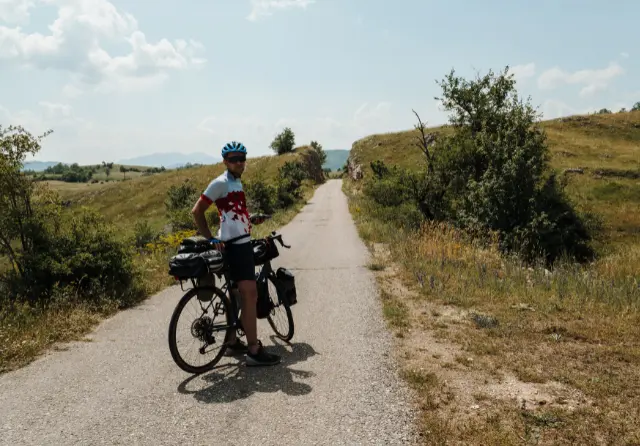
A gravel bike is suitable for routes that combine tarmac, gravel, and non-technical paths. Its tyres are wider than those of a road bike, and the drop handlebars offer multiple hand positions. If you are going to carry luggage, check which bags you can install on the bike and how much weight the frame can support.
The mountain bike performs better on tracks and paths with rocks, bumps, or steep gradients. Its wide tyres provide grip and absorb some of the irregularities. On tarmac, it has more resistance, especially if it has knobbly tyres or suspension.
Road bike
The road bike can be used for cycle touring on tarmac with light luggage. Its low weight and rolling efficiency favour long stages, but many models lack mounts for racks and have demanding gear ratios for climbing with a load.
Saddle, frame, and handlebar bags solve some of these limitations. Even so, before the trip, you must check the maximum allowed weight, the tyre width, and the space available to transport your gear.
E-bike
The e-bike makes journeys with elevation gain easier and helps maintain a more consistent effort. It can be found in touring, trekking, gravel, mountain, and road bike formats, so the motor does not determine the type of route that can be taken.
On multi-stage trips, special attention must be paid to battery range, weight, and charging points. The available distance will depend on the assistance level, elevation gain, load, wind, and road surface condition.
The most suitable bike will depend above all on the terrain and the luggage you are going to carry.
What a cycle touring bike should have
The characteristics of the bike influence stability, pedalling efficiency, and luggage carrying capacity. In addition to deciding what type of bike you want to use, you will need to look at the size, geometry, frame, wheels, drivetrain, and brakes.
Geometry, size, and riding position
The size must correspond to the cyclist's height and body proportions. In this guide, we explain in more detail how to choose the correct bicycle size. A frame that is too big or too small makes adjusting the saddle and handlebars difficult, alters your posture, and can cause discomfort after several hours on the bike.
The geometry also influences handling. A long wheelbase provides stability, while sufficiently long chainstays leave space to pedal without hitting the panniers with your heels. The handlebar height, reach, and saddle position should promote a posture that can be maintained throughout the stage without straining your hands, neck, or lower back.
Frame, wheels, and tyres
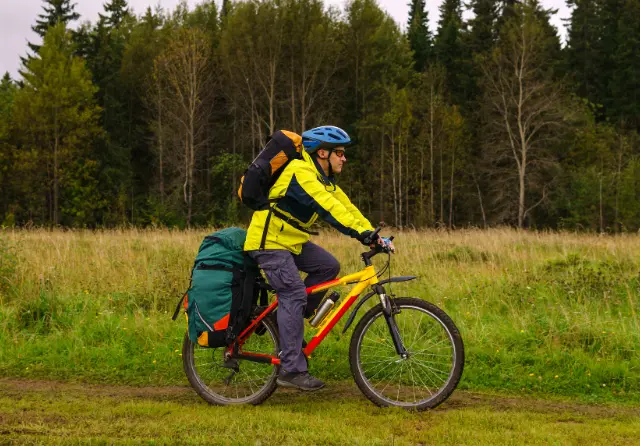
The frame must support the weight of the cyclist and the luggage, as well as having the necessary points to install racks, bottle cages, or mudguards. Steel offers strength and absorbs vibrations well, although it adds more weight. Aluminium is lighter and common in lower-priced models. Both materials are suitable for cycle touring if the frame is designed to support a load.
The wheels take on a large part of the additional effort generated by luggage. For this reason, they must have strong rims and spokes in good condition to support the weight and prolonged use. Tyre width will depend on the route. A narrow tyre with a smooth tread rolls better on tarmac, while a wider one improves grip and smooths out irregularities on tracks and paths.
Drivetrain, brakes, and load capacity
The drivetrain should offer low gear ratios for climbing slopes without forcing the pedal stroke when the bike is loaded. A wide range of gears is more useful in cycle touring than gear ratios designed for high speeds.
The brakes must safely stop the total weight of the bike, the cyclist, and the luggage. Disc brakes maintain performance better in the rain and offer greater control on long descents. Mechanical systems are usually easier to adjust and repair than hydraulic ones, an advantage on long trips through areas with few repair shops.
Before installing panniers or bags, you must check the maximum weight allowed by the manufacturer and verify the load the rack can support. Luggage should be distributed in a balanced way so that the steering remains stable and the rear wheel does not carry all the weight.
Basic equipment for cycle touring
Cycle touring equipment changes according to the duration of the route, the time of year, and where you will be sleeping. A few hours' ride requires little gear, while a multi-stage trip may include spare clothes, tools, chargers, and camping gear. Before packing your bags, review what you will actually need to avoid unnecessary weight.
If you are preparing a multi-stage trip, you can expand on this information in the equipment and preparation guide for cycle touring routes.
- Panniers or bags: Panniers offer more capacity and are suitable for multi-day trips or when carrying camping gear. Frame, handlebar, and saddle bags take up less space and are used on routes with light luggage. In both cases, the weight must be well distributed, and the contents must be protected from the rain.
- Tools and spares: Carry a pump, tyre levers, an inner tube compatible with your wheels or a repair kit for tubeless tyres, and a multi-tool. On long routes, a quick-link for the chain, cable ties, and a small amount of strong tape can also be useful.
- Safety and visibility: A helmet, front and rear lights, and reflective elements help you see and be seen. If you are going to leave the bike during stops, you will also need a lock.
- Clothing: Choose your cycling kit based on the temperature and combine items in layers. Add a waterproof jacket if there is a chance of rain.
- Water, food, and navigation: Calculate your water needs based on the distance between supply points and carry food that is easy to eat during stops. Your phone or GPS should have the route downloaded so it can be checked without mobile coverage. An external battery prevents running out of navigation on long stages.
- Camping gear: The tent, sleeping bag, and sleeping mat should be chosen according to the expected temperature and available space. If you are going to stay in accommodation, you can do without this gear and significantly reduce weight.
Preparing your gear based on the route avoids carrying unnecessary items and leaves room for what you will actually need.
You can start cycle touring with the bike you already have, provided it is your size, in good condition, and can carry the intended luggage. With an initial short route, you will know if you can maintain a comfortable posture, if the gears are sufficient for climbs, and how the weight affects stability.
If you want to go cycle touring during your holidays and are not travelling with your own bike, you can choose bike hire in Maspalomas, Gran Canaria and select the model based on the terrain, distance, and the type of route you plan to take.